
The Bill aims to increase the use of Sustainable Drainage Systems (SUDS) by ending the automatic right to connect to the sewers for surface water drainage and demanding developers put SUDS into place in new developments “wherever practicable”.
Connection will be conditional on meeting new, yet-to-be-established national standards on SUDS and drainage.
This move to more SUDS is intended to cut the volumes of water reaching sewerage treatment works and consequently reduce the risk of flooding from sewer overflows.
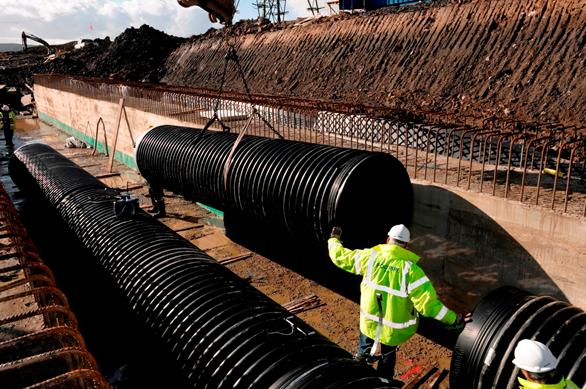
But the Bill has been criticised by experts for placing an emphasis on SUDS’ “soft engineering” characteristics. Soft-engineering solutions such as swales, ponds and wetlands are unpopular with developers as they take up large areas of land. Developers prefer hard engineered solutions such as attenuation tanks, which can be buried beneath parking. But the Bill says hard SUDS solutions are suitable only where “space is very restricted” and then that they “may be part of the solutuion.”
Soft SUDS may also prove unpopular with local authorities who, under the Bill, will be forced to adopt and maintain them. Soft-engineered solutions are more expensive and complex to maintain than an attenuation tank.
Despite this the Bill places a clear emphasis on soft SUDS.
“The nature of SUDS with their ‘soft engineering’, low velocities and storage characteristics means that normal and extreme levels of rainfall can be better managed, and pollutants can be retained and where possible broken down within the system, improving water quality,” says the draft Bill.
“There are a wide range of SUDS techniques, including permeable paving (including roads), swales, ponds and wetlands which can create attractive multi-functional green spaces in urban areas.”
“In areas where space is very restricted, more engineered solutions such as attenuation tanks may also be part of the solution,” it says.
But experts warned that misunderstandings about the nature of sustainable drainage systems, combined with insufficient funding for local authorities to implement the proposals effectively - may pose significant barriers to achieving widespread adoption.
“There’s a real concern that the Government may be looking through rose tinted spectacles in its definition of what SUDS means,” said British Water’s SUDS group chairman Alex Stephenson.
“To achieve proper adoption will mean tackling deeply embedded misperceptions about the nature of SUDS being closely associated only with ‘natural’ or soft solutions such as swales, ponds or wetlands. Otherwise many projects will be stopped in their tracks as being unworkable before they have even begun.
“It will be vital for industry to work closely with Government to ensure sensible provisions within the new national standards that enable both soft and hard engineered storage and treatment technologies to be used as appropriate to deal with polluted stormwater runoff and to slow flood waters down before they enter the sewers.
“Giving local authorities new powers to assess and manage local flood risk is the right way forward and they are keen to embrace the opportunity for stronger leadership. But there has been widespread concern that the move will be ineffective unless the Government provides more money to establish local authority flood engineers.
“Building the adequate technical knowledge and engineering expertise will take time, recruitment, practical guidance - and a significant amount of education about the nature of SUDS. This is necessary both within the Environment Agency in its strategic guidance role and within the new SUDS Approving Boards. It’s critical that work starts now to prepare for these changes, rather than waiting for the bill to become law.”
Hard SUDS provider Polypipe agreed.
“Although the draft Bill is a step in the right direction in helping the UK manages sustainable water levels and flood risk, there again appears to be a trend to focus on above ground, soft sustainable drainage (SUDS) solutions,” said Polypipe Water Management Solutions’ general manager Jason Shingleton.
“Whilst this guidance is what the industry needs following the severe flood events of 2007, it doesn’t go far enough in embracing a wide range of other appropriate SUDS solutions. A holistic approach to water management that utilises a combination of above and below ground SUDS techniques is needed to ensure designers and engineers can implement the most appropriate solution for a particular project.
“Whichever questions are raised about the performance and capability of below ground SUDS, the truth is that the use of these solutions has been on the increase for the past five years. By focussing purely on above ground solutions the Floods and Water Management Bill could present further confusion by creating uncertainty over whether a hard or soft SUDS solution is more appropriate.”
The Flood and Water Management Bill has been drafted in response to the review carried out by Sir Michael Pitt following the devastating floods of 2007.
Two thirds of the flooding was the result of surface water runoff. More than 50,000 properties were affected, leading to a £3bn insurance bill.
The flooding highlighted major shortcomings in the infrastructure and management of surface water drainage in the UK.

