

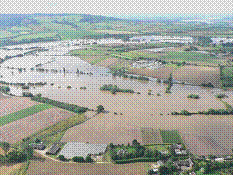
 The
summer of 2007 was, for England and Wales, the wettest since 1766 when recording
began. Record-breaking floods in major river catchments, particularly the
rivers Severn, Don, Thames and their tributaries, inundated about 49,000
households, 7,000 businesses, and 20,000 ha of farmland. Besides their
immediate impact, these floods can have serious and potentially long-term
consequences for those engaged in land-based activities such as farming, and for
owners and occupiers of commercial, domestic, and public properties. Uncertain
weather patterns and an increase for floodplain development contribute to the
potential for more frequent flooding events in the future.
The
summer of 2007 was, for England and Wales, the wettest since 1766 when recording
began. Record-breaking floods in major river catchments, particularly the
rivers Severn, Don, Thames and their tributaries, inundated about 49,000
households, 7,000 businesses, and 20,000 ha of farmland. Besides their
immediate impact, these floods can have serious and potentially long-term
consequences for those engaged in land-based activities such as farming, and for
owners and occupiers of commercial, domestic, and public properties. Uncertain
weather patterns and an increase for floodplain development contribute to the
potential for more frequent flooding events in the future.
This research aims to provide data that will inform flood risk management policies, in particular to
 Ascertain the immediate and long-term
consequences of the 2007 floods on farms and farmland, agricultural and rural
economies, and domestic and commercial activities in urban areas;
Ascertain the immediate and long-term
consequences of the 2007 floods on farms and farmland, agricultural and rural
economies, and domestic and commercial activities in urban areas;
Assess the implications of possibly more
frequent flooding of farmland.
This research is funded by the Environment Agency, the Commission for Rural Communities, and the Rural Economy and Land Use Programme, and will be carried out by a consortium comprising Cranfield University (rural and farmland impacts), University of Sheffield (urban impacts), and Middlesex University (survey methods) with Cranfield University as the lead organisation.
Our research teams will be collecting data in rural regions of Oxfordshire, Gloucestershire, Worcestershire, and Yorkshire during January to March 2008. Personal details of respondents will be treated confidentially and data will remain anonymous. Personal details will not be passed on to third parties. A report will be produced for the Environment Agency in July 2008. Environment Agency reports are normally available from their website at http://www.environment-agency.gov.uk/
If you are reading this, you may well be a respondent providing information to our research teams. In which case we thank you for your participation and support!